How to Follow the Wall Street Dress Code for Men

Wall Street style has always signaled competence and credibility. From Gordon Gekko's power-dressing era to Goldman Sachs relaxing its dress codes in 2019, the rules have shifted, but the principle hasn't: what an investment banker wears still matters, even if the white-collar uniform looks different from what it did in 1987.
Here's what men actually wear in finance today: the core wardrobe pieces, outfit ideas for every setting, and how to build a wardrobe that works through long days and evening plans. Whether you're in traditional investment banking or a more relaxed fintech environment, the goal is the same: look ready without overthinking it.
What Is the Wall Street Dress Code for Men?
The Wall Street dress code sits on a spectrum. Traditional finance roles in investment banking and wealth management still lean toward formal attire, while hedge funds, fintech startups, and internal positions have shifted toward business casual.
Understanding where your firm falls on this spectrum is the first step to dressing appropriately.
How Wall Street Style Evolved
The 1987 film Wall Street shaped how finance workers dressed for decades. Gordon Gekko's power dressing, with white contrast-collar shirts, suspenders, and double-breasted suits, became aspirational symbols. Bud Fox's transformation from ill-fitting, off-the-rack suits to tailored pieces mirrored every junior banker's career arc—the same arc that still runs from analyst to VP today.
The real Wall Street today looks different. Goldman Sachs sent a memo to some 36,000 employees(opens in new window) announcing they no longer needed to wear a coat and tie, and JPMorgan followed with similar flexibility.
Watch what senior people wear your first week before making any style choices. The enduring rule: slightly overdressed always beats looking out of place.
Core Pieces of a Wall Street Wardrobe
The strongest finance wardrobes are built on versatile style staples that work together. One-off pieces sit unused.
Dress Shirts
White and light blue shirts cover most situations, with light pink and lavender as secondary options. matters more than the brand on the label. Whether you prefer , shoulders should align naturally with a precise cut through the body.
Fabric and features that matter:
- Performance fabrics: Traditional cotton wrinkles by noon, while wrinkle-resistant dress shirts with fabric maintain a crisp appearance through long days
- Collar styles: Spread and semi-spread collars work for formal settings, while button-down collars suit business casual environments
- Cuff and pocket details: Barrel cuffs handle most situations, and you should skip the shirt pocket in formal contexts
Dress Pants
Navy, charcoal, and medium gray handle virtually any situation. Flat-front with a tailored line through the leg is the modern standard.
Pleats feel dated in most finance environments. Dress pants with performance stretch hold their shape through back-to-back meetings and a demanding 60-hour workweek. Pants with a side adjuster skip the belt for an even more finished waistline.
Suits
Navy and charcoal suits will carry you through most of your career. There's an enduring appeal to both that trend-driven colors never quite match. Single-breasted, two-button, notch lapel is the style that works everywhere. A subtle herringbone or pinstripe adds texture without breaking from the conservative dress code.
Double-breasted suits and peak lapels command attention but require confidence to pull off.
For most men starting out, modern suits in classic, ready-to-wear cuts offer the most long-term value, you don't need a Savile Row budget to get the fit right.
Blazers
A navy blazer bridges the gap between formal and business casual better than any other single piece. It pairs equally well with shirts and chinos or dress pants.
Look for structured, broad shoulders and a defined waist.
Professional Footwear
Cap-toe oxfords remain the standard for formal settings. Penny loafers or Gucci-style bit loafers work in business casual environments.
Color and maintenance guidelines:
- Black shoes: Pair with charcoal and navy suits
- Brown shoes: Work in less formal contexts
- Condition matters: Clean, well-maintained shoes are non-negotiable, as scuffed leather undermines everything you're wearing above the ankle
Wall Street Outfit Ideas
The classic Wall Street look depends on where you're going and who you're meeting.
The Traditional Finance Look
This combination built Wall Street's reputation: navy or charcoal suit, white or blue shirt, silk tie, black cap-toe oxfords. Investment banking, wealth management, and formal client meetings call for this level of .
A full Windsor knot fills a spread collar without looking try-hard; a simple knot works fine everywhere else and takes half the time in the morning.
The Everyday Analyst Outfit
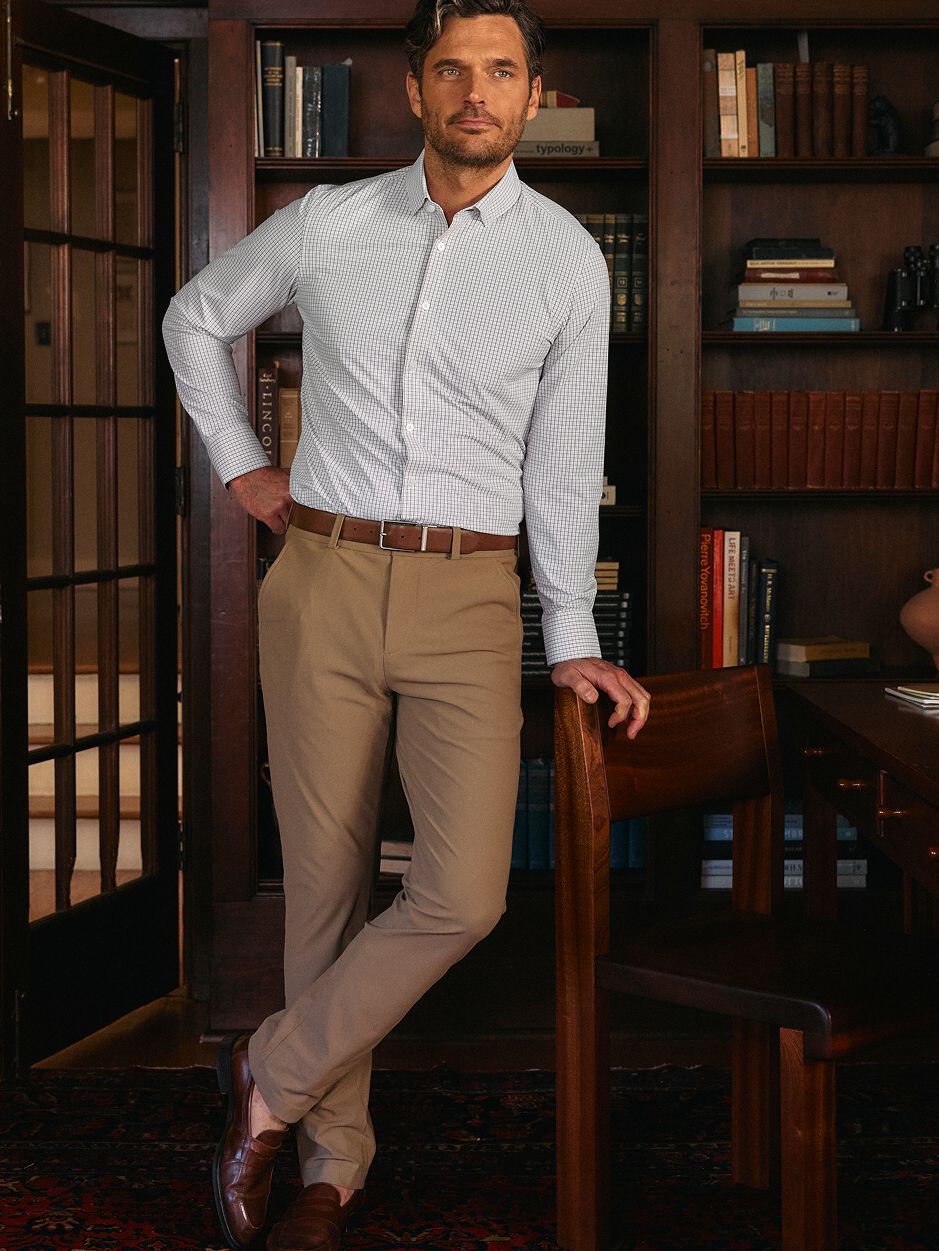
Most days don't require a full business suit. A shirt without a tie, rolled-up sleeves, tailored dress pants, and leather loafers or lace-ups handle daily office wear and internal meetings comfortably. This is the workhorse outfit for desk days at most finance firms.
The Client Meeting Outfit
External meetings and presentations call for a more formal outfit. A suit or sport coat with a shirt and well-kept leather shoes signals preparation.
Whether you add a tie depends on your firm's culture. For high-stakes situations, see our guide on what to wear to a board meeting.
The Business Casual Office Outfit
Casual Fridays, hedge funds, fintech firms, and smaller brokerages with relaxed codes still require intention. A shirt or performance polo with and clean leather shoes works well.
The business casual trap catches plenty of men. Relaxed does not mean sloppy, structure still matters.
The After-Work Networking Look
Industry events and after-work drinks call for something semi-formal: between full business and fully casual. A blazer over a shirt with the collar open, chinos or dark dress pants, and loafers strikes the right balance.
This is your third wardrobe, built for networking without looking like you just left a board meeting.
Build a Professional Wall Street Look
Success in finance dressing comes down to details and discipline, dressed conservatively enough that no one in the room is thinking about your clothes at all. These principles apply regardless of where your firm falls on the formality spectrum:
Core principles for finance dressing:
- Fit over brand: Knowing how to measure a dress shirt ensures a well-tailored fit that beats an expensive label that doesn't sit properly
- Read the room: Observe senior colleagues before innovating on your style
- Details add up: Clean shoes, matched belt and shoes, and a pressed collar signal effort without saying a word
Accessories that work:
should enhance your look, not distract from it. Silk ties in navy or burgundy work universally. Match your belt to your shoes. Keep watches understated.
Braces belong to the Gekko era, along with the pinky ring, both rarely seen outside a themed party these days. Tie bars, cufflinks, and pocket squares work with restraint, but skip bold accessories.
Your starter wardrobe:
- Two suits (navy and charcoal)
- Five shirts (white, light blue, subtle patterns)
- Three pairs of dress pants
- Two pairs of shoes (black and brown)
- One navy blazer
Every piece should work with your entire wardrobe, not just one outfit. Performance fabrics with wrinkle resistance and stretch make mornings easier and help each garment last longer. Use that flexibility to match your office, your day, and your client expectations.
The best wardrobe is one you don't have to think about, built on versatile pieces that hold up through long days. This isn't black tie. It's Monday morning, and it needs to work that way for years.
Mizzen+Main builds wardrobes with that goal in mind. Each piece is made to fit well, move easily, and hold up through long workdays. The pieces pair classic style with fabrics that help you stay ready through a long day. It is clothing made for workdays, travel days, and everything in between.
For more professional wardrobe guidance, explore our guide to business attire.
Sources
The Mizzen+Main Style Desk is our editorial voice on classic menswear. Content is developed with and reviewed by Will Jenkins, Brand Manager, who works directly on Mizzen+Main's brand strategy, positioning, and tone of voice.